

Track Introduction
Customized by Tencent AI Arena Platform and Chengdu Intelligent Transportation Information Technology Group Co. ,Ltd. , this track concentrates on urban transportation demands. Teams must use reinforcement learning and other algorithms to design effective traffic coordination strategies, aiming to meet intelligent scheduling goals.
Target Participants
This track is open to applications from vocational students, undergraduate students, and master's/doctoral students who are currently enrolled in full-time higher education institutions nationwide. Participants must participate as teams. Each team member must come from the same university, with a maximum of 5 members and at least one mentor. Team members are not limited to any major and can only join one team per person.
Format Intro
Rewards
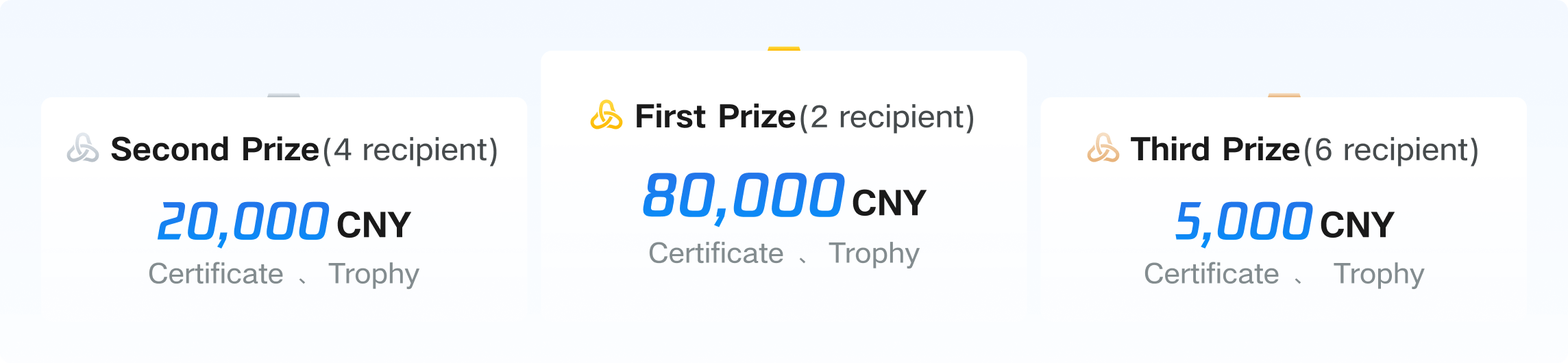
For all participating teams, the final score of this track consists of two parts: [Online Ranking] and [Offline Evaluation]. The top 12 teams in the online ranking will be required to participate in the offline defense session, and the total score will be evaluated with reference to the results of the two parts, and the first, second and third prize certificates and corresponding prizes will be awarded in order. The amount of prize money is RMB (before tax).
In addition to the prize money, participating teams will also receive the following rewards:
1、All teams completing the competition (by successfully submitting a model and passing verification) will be awarded an official certificate of participation.
2、Exceptional participants may have the opportunity to secure internships related to Tencent's AI Arena Program and gain priority access to Tencent Group's campus recruitment and internship programs. Detailed information will be provided later.
Schedule
About the Challenge:In this local challenge, participating teams are required to operate traffic lights through algorithmic models within a simulated traffic environment provided by the platform. The objective is to maximize vehicle service under various traffic conditions (such as peak hours, rainy weather, etc.), aiming to achieve the highest overall score in the simulated environment.
Objective:Teams must train and submit a model locally within a given timeframe. During the final evaluation, they need to manage traffic signals in a scenario to gather as many points as possible.
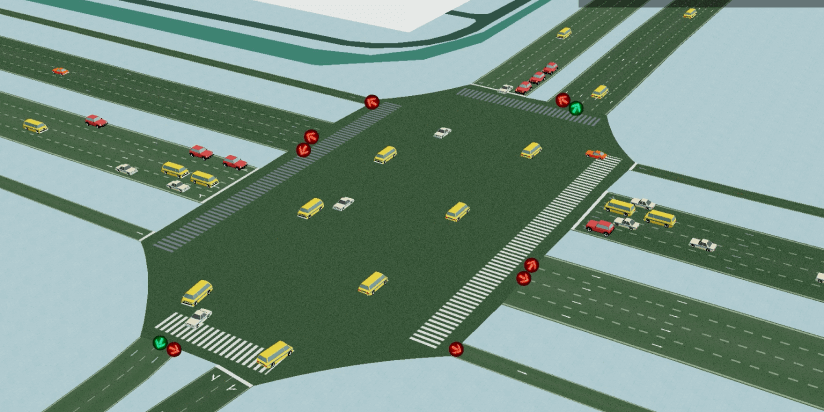
Points Rules:After teams submit their models, comprehensive scoring will be based on the following indicators:
Average Travel Time: The arithmetic average of the time taken to travel between two points, with travel at a single intersection represented by the driving distance from the approach to a certain point on the exit lane.
Average Vehicle Speed: The average speed achieved over specific roadway segments during travel.
Queue Length: The distance from the stop line at a signalized intersection to the end of the queue of vehicles, measured in terms of the number of vehicles in the queue.
Ranking Rules:After the participating teams submit their model evaluation scores, they are ranked based on these scores. The top 8 teams enter the expert review stage. The final score is determined by combining the model scores and the expert review scores. The final ranking is then made from high to low according to the total score.(Specific evaluation rules to be announced)
Recommendations
It is advised that each team possess at least one computer adhering to the recommended specifications below to establish the local environment for development and training.